
We’ve all experienced it — a misunderstood text, a tone taken the wrong way, or a conversation that spiraled into tension instead of understanding. Miscommunication is a common part of human interaction, but what many people don’t realize is just how powerfully it affects our internal physiology. The stress caused by unclear communication doesn’t just stay in the mind; it cascades through the body, activating powerful biological systems designed for survival, not for daily workplace or relationship misunderstandings.
When we perceive that we’ve been misunderstood, dismissed, or unfairly blamed, the brain interprets it as a social threat. The amygdala, our brain’s emotional alarm center, lights up and sends a distress signal to the hypothalamus, which then triggers the fight-or-flight response. This sets off a surge of stress hormones such as cortisol and adrenaline, increasing heart rate, muscle tension, and blood pressure. Our breathing quickens, digestion slows, and blood flow is redirected toward our limbs — as if we were preparing to escape a predator rather than resolve a conversation.
At the same time, the prefrontal cortex, responsible for reasoning and impulse control, temporarily goes offline. This means our ability to listen, empathize, and think clearly diminishes just when we need it most. Instead of calmly clarifying our meaning, we become defensive, curt, or emotionally reactive — often deepening the misunderstanding.
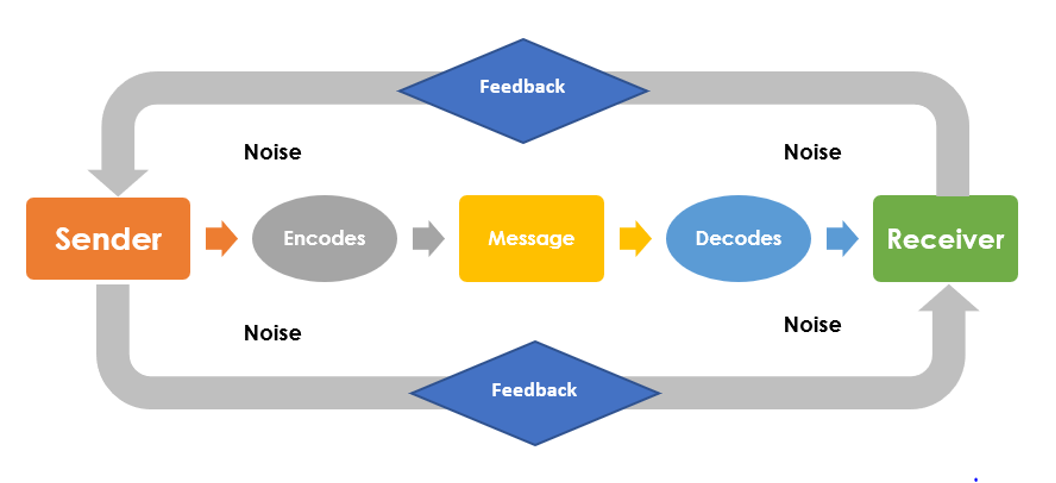
 Communication, in the simplest sense of the term includes a Sender, a message, and a receiver. However, that message must first be encoded by the sender, and then decoded by the receiver. Unfortunately, the extraneous contextual variables, or stressors, create “noise.” Things that may distort that encoding/decoding. Consider also, the bi-directional role that feedback plays. Safe co-regulatory relationships in a equilibrium or homeostatic state (where energy/tension are balanced, is the best way to ensure clear communication.
The good news is that our brains and bodies are also wired for repair. Clear communication, active listening, and empathic tone can reverse these stress responses by activating the parasympathetic nervous system — the body’s “rest and restore” state. When we feel heard and understood, oxytocin and serotonin help calm the amygdala, lowering heart rate and blood pressure while restoring cognitive clarity and emotional balance.
In short, miscommunication is more than an inconvenience; it’s a stressor. Understanding our stressors, managing our energy and tension levels can help us frame and reframe conversations with patience, presence, and compassion – strengthening relationships and enhancing our own physiological well-being. Cognitive Dynamics can help.








Leave A Comment